The Real Truth: Manfrotto One or Sony A7 V?
The digital imaging landscape is currently witnessing a fascinating collision of two distinct philosophies. On one hand, there is the relentless march of technological evolution represented by the Sony A7 V, a mirrorless camera that promises to redefine the boundaries of what a full-frame sensor can achieve. On the other hand, there is the Manfrotto One, a bold entry from a company traditionally known for support systems, which aims to prioritize the tactile experience and structural synergy of the photographer’s workflow. Choosing between these two is not merely a matter of comparing specifications; it is an exploration of what a modern creator values most in their craft.
For years, the Sony A7 series has been the benchmark for the "everyman" professional camera, balancing resolution, speed, and video capabilities. The fifth iteration of this storied line arrives at a time when artificial intelligence and computational photography are beginning to take center stage. Conversely, the Manfrotto One enters the market as a disruptor, emphasizing that a camera is part of a larger ecosystem of stability and lighting. It challenges the notion that more megapixels always equal better images, focusing instead on the ergonomics of the take and the reliability of the output in high-pressure environments.
The Engineering Marvel: Sony A7 V Analysis
The Sony A7 V represents the pinnacle of iterative refinement. At its core lies a newly developed 42-megapixel back-illuminated full-frame sensor that strikes a delicate balance between high-light sensitivity and raw detail. What truly sets this camera apart, however, is the dedicated AI processing unit. This chip is designed to handle complex subject recognition, moving beyond simple eye-tracking to understand human poses, animal movements, and even the predictable trajectories of vehicles. For the wedding photographer or the sports journalist, this means a hit rate that was previously unthinkable.
Beyond the autofocus, the Sony A7 V addresses long-standing concerns regarding the user interface and physical handling. The body remains compact but features a more pronounced grip and a revised heat-dissipation structure that allows for extended 4K 60p recording without the dreaded "overheating" warning. The inclusion of a 9.44 million-dot electronic viewfinder provides a near-optical experience, which is critical for those transitioning from traditional DSLRs who still crave that immediate sense of connection to the scene.
In real-world use, the A7 V excels in "run-and-gun" scenarios. Whether it is a documentary filmmaker capturing candid moments in low light or a landscape photographer needing the dynamic range to pull detail from deep shadows, the Sony sensor delivers. The 15+ stops of dynamic range ensure that even the most challenging high-contrast scenes can be tamed in post-production. It is a tool designed for the professional who needs a camera that stays out of the way while automating the most tedious aspects of the technical process.
Pros and Cons of the Sony A7 V
- Unmatched Autofocus: The AI-driven subject tracking is currently the gold standard in the industry, capable of staying locked on subjects even through foreground obstructions.
- Resolution Efficiency: The 42MP sensor provides enough detail for large-scale prints without creating the massive file-handling headaches associated with 60MP+ sensors.
- Video Prowess: With 10-bit 4:2:2 internal recording and advanced stabilization, it functions as a highly capable secondary cinema camera.
- Extensive Lens Ecosystem: The E-mount is the most mature mirrorless mount on the market, offering options from budget-friendly third-party glass to high-end cinema lenses.
- Complex Menus: Despite improvements, the Sony menu system remains dense and can be overwhelming for new users or those switching from other systems.
- Battery Longevity: While the Z-series battery is excellent, the heavy reliance on AI processing and high-res viewfinders can drain power quickly during intensive shoots.
The Disruptor: Manfrotto One Analysis
The announcement of the Manfrotto One sent ripples through the industry. Known for tripods and bags, Manfrotto’s foray into camera bodies is built on the concept of "The Unified Workflow." The Manfrotto One is not trying to beat Sony at the spec game; instead, it is designed to be the most "mountable" and "integratable" camera ever made. Its chassis features built-in Arca-Swiss rails and multiple 1/4-20 and 3/8-16 mounting points directly on the frame, eliminating the need for bulky third-party cages.
Internally, the Manfrotto One utilizes a specialized 33-megapixel sensor optimized for color accuracy and skin tone reproduction. It targets studio photographers, architects, and product creators who often work tethered. The camera features a built-in high-speed Wi-Fi 6E module and a dedicated hardware port for ultra-stable tethering, acknowledging that for many pros, the camera is just the first step in a digital pipeline that ends on a calibrated monitor.
The handling of the Manfrotto One is deliberately industrial. It feels like a piece of high-end machinery rather than a consumer electronic device. The physical dials are large and knurled, designed to be used with gloves or in cold weather. It lacks the "bells and whistles" of the Sony, eschewing 120fps bursts for a "quality over quantity" approach. Every design choice in the One is about stability—mechanical, digital, and thermal.
Pros and Cons of the Manfrotto One
- Structural Integration: The "cage-free" design with integrated mounting points is a revelation for videographers and studio shooters who use many accessories.
- Color Science: The sensor tuning focuses on naturalistic palettes, requiring less time in Lightroom to achieve professional-grade skin tones.
- Thermal Management: Because the body is slightly larger and made of advanced magnesium alloys, it can record video indefinitely without heat issues.
- Simplified Interface: The software is refreshingly minimal, focusing on the core manual controls that experienced photographers use 90% of the time.
- Weight and Bulk: It is significantly heavier than the Sony A7 V, which may deter those who prefer to travel light or shoot handheld for hours.
- Limited Initial Support: As a first-generation product, the Manfrotto One lacks the decade of accessory and lens ecosystem maturity enjoyed by the Sony.
Head-to-Head Comparison
To understand where these two cameras sit in the market, it is helpful to look at their core specifications side-by-side. While numbers do not tell the whole story, they provide the framework for the different audiences these manufacturers are targeting.
Looking for the best Cameras & Photography deals on Amazon?
See Deals →| Feature | Sony A7 V | Manfrotto One |
|---|---|---|
| Sensor Type | 42MP BSI Full-Frame | 33MP "Precision Color" Full-Frame |
| Autofocus | AI-Enhanced Hybrid (759 points) | Phase Detect (425 points) |
| Mount | Sony E-Mount | "Open-Standard" L-Mount |
| Build Material | Magnesium Alloy / Polycarbonate | Reinforced Industrial Magnesium |
| Video | 4K 60p (Over-sampled) | 4K 30p (No Crop) / 4K 60p (Limited) |
| Connectivity | USB-C 3.2, HDMI Type A | High-Speed Tether Port, Wi-Fi 6E |
| Mounting | Standard 1/4-20 tripod socket | Integrated Arca-Swiss & Multi-Points |
Real-World Use Cases: Which One Fits Your Life?
The choice between these two platforms often comes down to the environment in which you find yourself most frequently. Software-driven excellence vs. hardware-driven utility is the primary theme here. Let’s look at how these cameras perform in specific, common scenarios.
The Wedding and Event Professional
In the chaos of a wedding reception or a fast-paced corporate event, the Sony A7 V is almost impossible to beat. The AI subject recognition allows the photographer to focus on composition and emotion rather than hunting for focus points. If a bride is walking through a crowd, the Sony will find her eye and stay there. Additionally, the lightweight nature of the A7 V body means less fatigue after a twelve-hour day. The dual card slots and industry-leading battery life provide the redundancy and reliability needed when there are no "second takes."
The Studio and Architectural Photographer
For someone whose camera spends 90% of its life on a tripod or a geared head, the Manfrotto One starts to look like the superior choice. The integrated mounting points mean you can attach monitors, transmitters, or even small LED panels directly to the camera without worrying about a cage slipping or adding unnecessary bulk. The color science of the One is tuned for "faithful" reproduction, which is essential for architects who need to match paint colors exactly or product photographers working with high-end fashion brands. The tethering stability is the "killer feature" here—it feels less like a portable camera and more like a high-end digital back.
Before committing to a new ecosystem, you must evaluate several factors that go beyond the initial price of the body. These "hidden" costs and considerations can significantly impact your long-term satisfaction. The Sony E-mount is arguably its greatest strength. You can buy a $300 prime lens or a $12,000 telephoto, and both will work flawlessly. The Manfrotto One uses the L-mount alliance (shared with Panasonic, Leica, and Sigma). While this mount is growing rapidly and offers some of the best optics in the world (specifically from Leica and Sigma), it does not yet have the sheer variety of niche and budget glass that Sony offers. If you already own E-mount glass, the A7 V is the logical step. If you are starting from scratch and want lenses with a more "organic" rendering, the L-mount glass for the One is exceptional. Cameras are physical tools. If you find yourself frustrated by small buttons and touchscreens, you will likely prefer the Manfrotto One. It is designed for tactile certainty. If you prefer a camera that feels like a smartphone—fast, responsive, and customizable through menus—the Sony will feel right at home. It is highly recommended to hold both bodies if possible; the weight difference is significant, and the grip shapes cater to very different hand sizes. We are entering an era where the camera "knows" what you are shooting. Sony is at the forefront of this. If you value a tool that can predict where a bird will fly or keep a car in focus at 150mph, that is software intelligence you are paying for. The Manfrotto One takes a more traditionalist stance. It assumes you are a skilled operator who knows how to manage your AF points. It provides the best raw data possible but expects more from the user. You have to decide if you want the camera to be an assistant or just a very high-quality recording device. Find top-rated Cameras & Photography products at great prices. Sony releases cameras on a fairly predictable cycle. This means the A7 V will likely be replaced in three or four years. While this keeps the technology fresh, it can lead to faster depreciation. Manfrotto, being new to the camera body space, is positioning the One as a "long-term" tool. Their history with tripods suggests they build things to last fifteen years, not fifteen months. If the Manfrotto One proves to be a reliable workhorse, it may hold its value better among a certain niche of professionals who value "mechanical" durability over "electronic" updates. The 42MP vs. 33MP debate is more nuanced than it appears. Sony’s sensor uses a Bayer filter and advanced noise-reduction algorithms that happen at the circuit level. This results in incredibly clean images at ISO 6400 and beyond. It is a sensor built for the shadows. The Manfrotto One’s sensor, while lower in resolution, features larger individual photosites. This often results in better "per-pixel" sharpness and a more graceful roll-off in the highlights. When you blow up a Manfrotto One image to 100%, it often has a "filmic" texture that avoids the overly digital, clinical look that some critics attribute to Sony’s processing. For portrait photographers, this texture can be far more valuable than a few extra megapixels of resolution. Furthermore, the sensor readout speed on the Sony A7 V is slightly faster, reducing the "rolling shutter" effect when filming fast-moving objects. This makes it the better choice for sports or action videography. The Manfrotto One, while competent, shows slightly more distortion in the vertical lines during fast pans, reinforcing its identity as a camera for controlled, deliberate movements. The "Real Truth" is that neither the Manfrotto One nor the Sony A7 V is the objectively "better" camera for everyone. Instead, they represent a fork in the road for the photographic industry. The Sony A7 V is the ultimate manifestation of the camera as a computer—focused on speed, intelligence, and versatility. It is the safe, smart, and highly effective choice for the vast majority of modern creators who need to deliver consistent results across various mediums. The Manfrotto One is something else entirely. It is the camera as a workstation. It is a heavy, purposeful, and structural tool that rewards a slower, more methodical way of working. By focusing on tethering, mounting, and color accuracy over burst rates and AI tracking, Manfrotto has created a specialist tool that will likely find a devoted following among studio professionals and "pro-sumers" who are tired of the consumer electronics rat race. If your work requires you to chase life as it happens, capturing fleeting moments in unpredictable light, the Sony A7 V is your best ally. If your work requires you to build a scene, control the light, and integrate your camera into a complex physical rig, the Manfrotto One offers a level of utility that no other camera on the market can match. The decision rests on whether you want a device that thinks for you, or a device that stands firmly with you.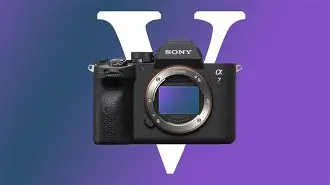
A Buying Guide: Factors to Consider
1. The Lens Investment
2. Ergonomics and Tactile Feedback
3. The Role of Artificial Intelligence
4. Longevity and Resale Value
Technical Deep Dive: The Sensor Debate
Conclusion