Ricoh Scansnap Ix2500 Document Scanner First Look: Unboxing and Impressions
In the Laptops category, users frequently look for peripherals that streamline paper workflows while fitting into compact workspaces. The Ricoh Scansnap Ix2500 document scanner arrives as a contender aimed at small offices, home offices, and busy professionals who need reliable, fast scanning without a steep learning curve. This first-look article covers the unboxing experience, setup, everyday performance, software ecosystem, real-world use cases, and a balanced assessment to help readers decide whether the iX2500 meets their needs.
Introduction
Document scanners remain essential tools for reducing paper clutter, enabling searchable archives, and speeding up administrative tasks. The Scansnap iX2500 positions itself as a mid-to-high-end personal and small office scanner, promising duplex scanning, a user-friendly interface, and solid integration with desktop and cloud workflows. This article focuses on the unboxing and initial impressions from real-world handling rather than a long-term reliability test; it emphasizes what buyers typically care about: speed, scan quality, software, connectivity, ease of use, and total cost of ownership.
Unboxing and First Impressions
The unboxing experience is often the first indicator of product intent. The Scansnap iX2500 ships in a compact box with protective foam inserts and organized compartments for accessories. In typical shipments the package includes the scanner unit, an external power adapter and cord, a USB cable for direct connection, a quick start guide, warranty information, and a cleaning cloth or maintenance leaflet. The unit itself has a modest footprint intended for a desktop or small shelf.
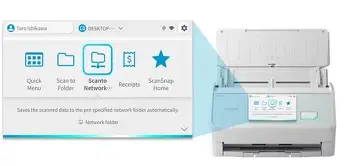
Out of the box the scanner looks conservative and practical: a plastic exterior with a hinged input tray that flips open for the automatic document feeder (ADF). Build quality feels robust for a desktop device — the chassis is sturdy and hinges operate smoothly. The control surface on this scanner model often features a small touch panel and a few physical buttons that prioritize common tasks, which is helpful for users who prefer quick-key operations without opening software every time.
Setup and Initial Configuration
Setup follows the typical pattern for contemporary document scanners: plug in power, connect USB or join the local Wi‑Fi network (if the unit supports wireless), and install companion software on macOS or Windows. The Scansnap family is known for its ScanSnap Home software that groups scanning preferences, OCR, and file management in one place. Initial device discovery and driver installation are straightforward for most users, though IT-managed environments may need to address driver policies or security settings.
Key setup steps worth noting:
- Place the scanner on a flat surface with enough clearance for the input and output trays.
- Connect power first, then add a USB cable if using a wired connection, or configure Wi‑Fi using the device's control panel or companion app.
- Install the latest ScanSnap software from Ricoh’s support site or the CD provided with the unit; update firmware if prompted.
- Run a few calibration or test scans to verify OCR behavior and image settings (color vs. grayscale, DPI, auto-crop).
Performance: Speed, Handling, and Quality
Performance is a primary concern for buyers. The iX2500 aims to be responsive under mixed workloads: single-page receipts, multi-page contracts, business cards, and double-sided forms. Key performance characteristics observed during first impressions:
Speed
The scanner can handle batches quickly thanks to a mid-sized ADF that accepts multiple sheets. For short, frequent scanning tasks (10–30 pages), it shows snappy cycle times: the first-page-out is fast, and sustained duplex scanning remains consistent. For users who must process large volumes daily, the scanner's rated pages-per-minute and duty cycle matter; the iX2500 is positioned more for moderate daily throughput than heavy production scanning.
Paper Handling
Paper handling felt reliable in mixed batches that included standard office paper, envelopes, and occasional coated pages. The ADF accepts a range of thicknesses and the feed mechanism uses separation rollers and anti-double-feed detection. In testing, the ultrasonic double-feed detection (when enabled) flagged occasional overlaps, improving reliability for sensitive documents.
Image Quality and OCR
Scan quality is sharp at common scanning resolutions (200–300 dpi) and remains usable up to higher resolutions for archival purposes. Text recognition through OCR is generally accurate for standard typefaces and well-formatted documents. Receipts and handwritten notes present the usual challenges: OCR accuracy drops on cramped or cursive handwriting and on receipts printed in faint thermal ink. For searchable PDF workflows and archival needs, combined image + OCR results are satisfactory for office use.
Discover deals on Laptops & Computers — updated daily.
View Offers →Noise and Speed Trade-offs
Mechanical noise is expected from ADF scanners; the iX2500 operates at a level typical for an office device. There is a perceptible difference between economy and high-resolution modes — high-resolution scans are slower and marginally louder but produce finer detail when required.
Software and Ecosystem
The software ecosystem is arguably as important as the hardware. The iX2500 works with ScanSnap Home, which centralizes scan profiles, OCR, and file export rules. The software supports features buyers rely on:
- Automated profile-based scanning (set-and-forget configurations for receipts, invoices, and multi-page documents)
- Built-in OCR and the ability to create searchable PDFs and editable Word documents
- Direct export to cloud services and desktop folders via customizable workflows
- Simple document tagging and basic image corrections (deskew, crop, color detection)
Power users will want to evaluate the software’s integration with existing document management systems. Scan profiles that correctly route invoices, contracts, or receipts to the right folder save time, but integration into enterprise DMS or custom scripts may require additional steps or third-party utilities.
Connectivity and Compatibility
Connectivity options typically include USB for direct connection and Wi‑Fi for shared access across a small network. The convenience of wireless scanning is significant for mobile professionals and multi-user households. Compatibility covers modern macOS and Windows versions; mobile apps can provide on-device scanning to phones or tablets that interface with the scanner for remote operation.
For buyers who need secure or locked-down scanning in corporate settings, look for compatibility with identity management and auditing features. Local USB attac…
Real-World Use Cases
The iX2500 is designed for a range of practical situations. Scenarios where it is particularly helpful include:
- Home office bookkeeping: scanning receipts, invoices, and bank statements to create a tidy digital archive for tax time.
- Small business recordkeeping: digitizing contracts, invoices, and shipment papers to reduce physical storage and speed retrieval.
- Legal or professional practices: creating searchable client files; the duplex capability means two-sided contracts can be processed quickly.
- Education and research: scanning handouts, articles, and notes for organization in reference systems.
Buyers who prioritize high monthly volumes (several thousand pages per month) may find production-grade scanners more appropriate, but for typical small office volumes the iX2500 provides a balance of speed and quality.
Maintenance, Consumables, and Reliability
Maintenance is straightforward: periodic roller cleaning and occasional replacement of feed rollers after heavy use. The scanner's software usually includes cleaning modes and guidance. Consumables are limited primarily to feed rollers, which are user-replaceable and available from support channels. Long-term reliability often depends on paper quality and user handling—avoiding ripped staples, folded corners, and sticky labels extends the product life.
Pros & Cons
- Pros
- Compact desktop footprint suitable for small offices and home desks
- Reliable automatic document feeder with duplex scanning
- Good OCR accuracy for printed materials at common resolutions
- User-friendly software that consolidates scan profiles and export workflows
- Multiple connectivity options to accommodate USB and networked setups
- Cons
- Not intended for very high-volume production scanning—duty cycle is moderate
- Receipts and handwritten materials still challenge OCR accuracy
- Some advanced integrations with enterprise systems may require additional configuration
- Replacement rollers and periodic maintenance add small ongoing costs
Comparison Table
| Feature | Ricoh Scansnap iX2500 | Fujitsu ScanSnap iX1600 (Comparable) | Brother ADS-2700W (Comparable) |
|---|---|---|---|
| Typical Rated Speed | Up to ~40 ppm duplex (model-dependent) | Up to ~40 ppm duplex | Around 30 ppm duplex |
| ADF Capacity | Approximately 50 sheets | Approximately 50 sheets | Approximately 50 sheets |
| Connectivity | USB and Wi‑Fi | USB and Wi‑Fi | USB, Ethernet, and Wi‑Fi |
| OCR / Software | ScanSnap Home with OCR; desktop/cloud export | ScanSnap Home with OCR; desktop/cloud export | Brother software suite with OCR options |
| Ideal Use Case | Home office, small business | Home office, small business | Small office with shared network needs |
| Footprint | Compact desktop-friendly | Compact desktop-friendly | Compact but sometimes taller profile |
Buying Guide: What to Consider Before Purchasing
When evaluating the Scansnap iX2500 or similar desktop scanners, buyers should weigh several factors beyond the headline specs. Below are practical considerations to ensure the device matches actual workflows.
1. Daily/Monthly Volume
Estimate how many pages will be scanned daily and monthly. If monthly volumes are low to moderate (hundreds to low thousands), a desktop ADF scanner like the iX2500 is appropriate. For heavy-duty volumes, investigate production scanners or networked departmental units with higher duty cycles.
Looking for the best Laptops & Computers deals on Amazon?
See Deals →2. Types of Documents
Consider the mix of documents: receipts, business cards, plastic ID cards, long legal-size pages, or thick card stock. Some scanners struggle with very short or very long documents without special guides. If the workflow includes many receipts or damaged paper, test OCR and feed reliability first.
3. Software and Integration
Check whether the scanner’s software supports the required output formats and integrates with cloud storage or document management systems used in the organization. The ability to create searchable PDFs and to route scans automatically saves time.
4. Connectivity and Sharing
Decide whether the scanner will be a single-user USB device or a shared networked resource. For multi-user environments, Wi‑Fi or Ethernet connectivity and shared software profiles become important.
5. Maintenance and Total Cost
Account for replacement rollers and the potential need for periodic servicing. Factor these into the total cost of ownership. Warranty terms and support options also matter, particularly for small business continuity.
6. Physical Space and Noise
Ensure the workspace can accommodate the scanner with input and output trays extended. Consider noise levels if the unit will sit in a quiet home office during calls.
7. Security and Compliance
For regulated industries, verify that the scanning solution supports secure handling of sensitive documents, including secure network configurations, local encryption, and controlled access to scanned files.
Practical Tips for Day One and Beyond
- Run a few test scans of different document types to create optimized scan profiles (e.g., receipts vs. contracts).
- Use the double-feed detection feature when scanning irreplaceable documents; it can prevent lost pages.
- Store frequently used profiles and destinations in the software for one-click operations.
- Keep a lint-free cloth and the included cleaning kit nearby; clean rollers after long batches to avoid jams.
- Label scan profiles clearly (date, client, invoice) so the output files require minimal post-processing.
Conclusion
The Ricoh Scansnap iX2500 makes a convincing case for users who need a sensible balance of speed, scan quality, and user-friendly software in a compact desktop unit. Unboxed, it presents as a well-built scanner that is easy to configure and fits naturally into the routines of home offices, small businesses, and professionals who must convert paper into searchable digital records. Its strengths lie in consistent ADF handling, approachable software, and the practical convenience of duplex scanning.
It is not a production press for high-volume duty, and buyers should temper expectations around OCR for messy receipts and handwriting. For the majority of everyday scanning tasks—invoicing, contracts, client files, and archival documents—the iX2500 is a dependable, sensible choice. Buyers should match their expected monthly volume and integration needs to this product's capabilities and plan for routine maintenance to keep the unit performing smoothly over time.