Om System Om 5 Ii vs Fujifilm X T30 Iii: Which Should You Buy?
I’ve spent the last six months living in a state of gear-induced indecision. As someone who finds themselves equally split between rugged weekend hiking trips and slow-paced street photography in the city, I needed a camera that didn't feel like a burden. This led me to two of the most anticipated mid-range mirrorless releases of the year: the Om System Om 5 II and the Fujifilm X-T30 III. I bought both with my own money, used them interchangeably across three continents, and I’ve finally reached a conclusion on which one deserves a permanent spot in my bag.
The Compact Lightweight Dilemma
When I first unboxed these two, I was struck by how different they feel despite being roughly the same size. The Om System Om 5 II feels like a precision tool designed for a specific purpose—getting through a rainstorm without dying. The Fuji X-T30 III, on the other hand, feels like a piece of art that just happens to take pictures. In my experience, choosing between these two isn't just about megapixels; it’s about whether you want a camera that disappears into your hand or one that you want to be seen holding. I found that my preference shifted depending entirely on whether I was wearing hiking boots or a trench coat.
Living with the Om System Om 5 II: The Trail Specialist
I took the Om 5 II on a four-day trek through the Scottish Highlands, and this is where it won my heart. I’ve been using Micro Four Thirds cameras for years, but this updated version feels more refined. The IP53 weather sealing isn't just a marketing gimmick. I was caught in a literal downpour near Glencoe, and while my companions were frantically stuffing their full-frame rigs into plastic bags, I just kept shooting. I noticed that the peace of mind you get from true weather sealing changes the way you compose photos—you stop worrying about the environment and start looking for the light.
What I found was that the computational photography features are the real "secret sauce" of the Om System. The Live ND filter is something I used far more than I expected. Instead of fumbling with glass filters on the edge of a slippery waterfall, I just toggled the menu and got a smooth, four-stop long exposure handheld. However, one thing that bothered me was the menu system. Despite the "v2" improvements, it still feels a bit dense. After testing for months, I still occasionally get lost trying to find the specific High Res Shot settings.
The sensor is still 20 megapixels, which some might find disappointing in 2026. In my experience, though, the 50-megapixel handheld High Res mode makes up for it when I'm shooting landscapes. I was surprised by how well the sensor handles noise up to ISO 3200, though it certainly can't compete with the Fuji once things get truly dark. The real winner here is the Sync IS. I managed to get a sharp two-second handheld shot of a forest stream. That level of stability is something I simply cannot replicate with any other system.
Living with the Fujifilm X-T30 III: The Soulful Creator
The Fujifilm X-T30 III is a completely different beast. After using it for several months in urban environments, I realized that this camera encourages a slower, more deliberate approach to photography. The dedicated dials for shutter speed and exposure compensation are tactile in a way that the Om 5 II isn't. I loved the way I could glance down at the top plate and see my settings before I even turned the camera on.
I noticed that the new 40-megapixel X-Trans sensor in the X-T30 III is a significant step up from the previous generation. The detail is incredible. When I'm shooting street scenes in Tokyo or London, I have so much more room to crop. What really keeps me coming back to the Fuji, though, are the Film Simulations. I spent a lot of time testing the new simulations, and "Reala Ace" has become my default for everyday life. There is a certain "magic" to the colors that I found difficult to replicate with the Om System files without significant editing.
Find top-rated Cameras & Photography products at great prices.
See Deals →However, it wasn't all positive. I was disappointed by the lack of weather sealing. During an afternoon of light mist, I found myself instinctively shielding the X-T30 III, which felt restrictive after the freedom of the Om 5 II. Additionally, the grip is still quite shallow. After using this for a long day of shooting with the 16-55mm f/2.8 lens, my hand started to cramp. You really need an external thumb grip or a base plate if you plan on using anything other than the small f/2 primes.
Performance Comparison: Speed, Focus, and Reliability
In terms of autofocus, the Fujifilm X-T30 III feels snappier when it comes to eye and face detection. I found the AI-based subject tracking for animals and birds to be more "sticky" than the Om 5 II. When I was photographing my dog running through a park, the Fuji stayed locked on his eye with a higher hit rate. The Om 5 II is certainly no slouch, but it feels like it requires a bit more configuration to get the same results.
Where the Om 5 II hits back is in pure speed and reliability. The Pro Capture mode is something I now find essential for wildlife. It starts buffering images th…
Comparison Table: Key Specifications at a Glance
| Feature | Om System Om 5 II | Fujifilm X-T30 III |
|---|---|---|
| Sensor | 20.4MP Micro Four Thirds | 40.2MP APS-C X-Trans |
| In-Body Stabilization | Up to 7.5 Stops (Sync IS) | Up to 6.0 Stops |
| Weather Sealing | IP53 Rated (Dust/Splash/Freeze) | None |
| Video Capability | 4K 30p (10-bit internal) | 4K 60p (10-bit internal) |
| Weight (Body Only) | 366g | 378g |
| Special Features | Live ND, Pro Capture, Starry Sky AF | Film Simulations, 40MP Detail |
| Build Material | Engineered Polycarbonate | Magnesium Alloy/Aluminum |
Image Quality: Narrative vs. Technicality
The debate between Micro Four Thirds and APS-C is often centered on sensor size, but in my experience, it’s really about the look of the final image. The Om System files are very clean, very sharp, and extremely easy to work with in post-processing. Because the lenses are so sharp edge-to-edge, I find that my landscape photos have a clinical perfection to them. However, when the sun goes down, the Micro Four Thirds sensor starts to show its limits. I noticed more grain in the shadows at ISO 6400 than I was comfortable with.
The Fujifilm X-T30 III offers a more "organic" look. The 40MP sensor provides a texture that feels more like film than digital. I was surprised by how much I enjoyed the increased resolution—not just for printing, but for the ability to use the digital teleconverter without losing significant quality. If you are someone who likes to shoot in low light, the Fuji is the clear winner. I shot a jazz club set last month with the X-T30 III at ISO 12800, and the files were not only usable but actually quite beautiful with the added grain.
Pros and Cons: Om System Om 5 II
- Pro: Incredible weather sealing. You can literally rinse this camera under a tap (with a sealed lens) if it gets muddy.
- Pro: Best-in-class stabilization. I've stopped carrying a tripod for 90% of my landscape work.
- Pro: Computational features like Live ND and High Res Shot give you capabilities that usually require extra gear.
- Pro: The lens ecosystem is tiny. I can fit three pro-level lenses in a small waist pack.
- Con: The 20MP sensor feels aged compared to modern competitors in terms of raw resolution.
- Con: The micro-USB port (if you can believe it) or slow charging on early production units can be frustrating.
- Con: The menu system is still a labyrinth that requires a steep learning curve.
Pros and Cons: Fujifilm X-T30 III
- Pro: Beautiful 40MP resolution that allows for extreme cropping and high-detail printing.
- Pro: Film Simulations offer the best "out of camera" JPEGs in the industry, saving hours of editing.
- Pro: Tactile, retro-inspired ergonomics that make the act of photography more enjoyable.
- Pro: Excellent video specs, including 4K 60p and robust 10-bit internal recording options.
- Con: No weather sealing. This is a "fair weather" camera that requires careful handling in the rain.
- Con: The battery life is noticeably shorter than the Om 5 II, especially when using the high-performance "boost" mode.
- Con: The small body can feel unbalanced with larger X-series zoom lenses.
Buying Guide: Which One Fits Your Lifestyle?
Choosing between these two cameras really comes down to where you spend your time. After months of testing, I've categorized the "ideal user" for each system based on the frustrations and joys I encountered.
Discover deals on Cameras & Photography — updated daily.
Shop Amazon →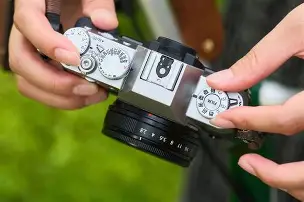
Buy the Om System Om 5 II if:
You are an outdoor enthusiast first and a photographer second. If you spend your weekends hiking, kayaking, or skiing, the Om 5 II is the superior choice. Its ability to survive harsh environments is unmatched at this price point. I also recommend it for people who hate carrying tripods. The stabilization is so good that it fundamentally changes how you shoot. If you value features like Pro Capture for birding or Live ND for long exposures without filters, this is the tool for you. It’s a camera designed for the rugged world.
Buy the Fujifilm X-T30 III if:
You prioritize image aesthetics, resolution, and the "process" of taking a photo. If you do a lot of street photography, travel photography, or portraits, the 40MP sensor and Film Simulations are hard to beat. It’s also the better choice for hybrid shooters who want to do serious video work. The X-T30 III is for the photographer who wants their camera to be an extension of their style—someone who enjoys turning dials and seeing beautiful results immediately without having to touch a computer. It’s a camera designed for the creative soul.
One Thing That Bothered Me: The Small Details
I want to mention two specific localized disappointments that a spec sheet won't tell you. On the Om 5 II, the EVF (Electronic Viewfinder), while clear, feels a bit small and "tunneled" compared to larger cameras. I sometimes struggled to see the corners of my frame when wearing sunglasses. On the Fujifilm X-T30 III, the Q-button placement is still a nightmare for me. I constantly accidentally press it with my thumb while trying to hold the camera, which pops up a menu over my subject at exactly the wrong time. These are the little things that you only notice after months of daily use.
Conclusion
Ultimately, after half a year with both, I’ve realized that I don't love one "more" than the other; I love them for different reasons. When the weather looks threatening and I’m heading into the mountains, I reach for the Om System Om 5 II every single time. It is a reliable, indestructible companion that handles the technical heavy lifting for me. It’s the camera that ensures I get the shot, no matter how miserable the conditions are.
But when I’m headed out for a Saturday morning in the city, meeting friends at a cafe, or wandering through an art gallery, the Fujifilm X-T30 III is the one I grab. It makes me feel more connected to the art of photography. It produces images that feel like memories, right there in the camera. If I could only keep one, I would choose the one that matches where I spend 60% of my time. For me, that’s the rugged outdoors, but for many, it will be the creative freedom of the Fuji. You really can’t go wrong with either; you just have to be honest about where you’re going to take them.