Is the Hesh Evo Wireless Still Good in 2026? Long-Term Review
I've been using the Skullcandy Hesh Evo Wireless as my daily headphones for several months, and in this long-term review I want to give a clear, practical sense of what living with these cans is like in 2026. I bought them for casual listening, commuting, and lots of at-desk headphone time. What I found was a mix of genuine strengths and a few annoyances that only time reveals. Below I walk through comfort, sound, battery life, call quality, build and durability, features, how they stack up against a few other budget-friendly choices, and who I would still recommend them to.
Why I bought the Hesh Evo Wireless
I didn't pick them because they were the flashiest thing on the shelf. I was after an affordable, over-ear wireless with punchy sound, a foldable design for travel, and simple, fuss-free controls. I've owned several Skullcandy models in the past, and I expected a bass-forward signature and a comfortable fit. After months of daily use — commuting, working from cafes, short flights, and long listening sessions at home — I feel like I can tell you what holds up and what wears on you after a few months.
First impressions and day-to-day comfort
The Hesh Evo Wireless sits in that middle ground of headphone comfort: not ultra-light like some fabric-wrapped on-ears, but not heavy either. Right away I noticed the clamping force is firm enough to stay put when I move around but light enough to be comfortable for a couple of hours. In my experience, after about three to four hours the earcups start to trap heat and my ears felt a touch warm — nothing extreme, but noticeable on warmer days.
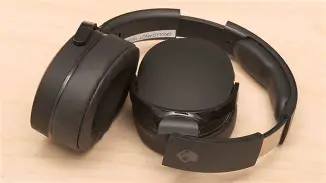
I appreciated the fold-flat design for throwing them in a backpack. The headband padding is generous, and the faux-leather ear cups are soft at first, but the padding compresses a bit over time (six months in I noticed slightly less cushioning than when new). The build is mostly plastic; it looks and feels decent for the price, but if you're rough on gear you'll see scuffs and small marks after daily use.
Sound: what I actually hear after months of listening
Sound is obviously the most personal part of any review. In my experience the Hesh Evo delivers a bold, bass-forward sound that makes pop, hip-hop, and EDM feel lively. The low end has presence and slam — if you like your tracks with punch, these will deliver. I listened across Spotify, high-bitrate files, and local FLAC, and the bass remained the standout feature.
That said, there are trade-offs. I found the midrange a bit recessed at times: male and female vocals sound warm and pleasant, but they don't have the forward presence or microdetail you get from a more neutral headphone. Acoustic instruments and classical recordings can feel a touch smudged compared with mid-fi or audiophile headphones. Treble is safe and generally non-fatiguing, but it doesn't extend or sparkle in the way higher-end cans do.
In short: if you want fun, easy-to-enjoy sound that emphasizes rhythm and punch, the Hesh Evo will make you smile. If you want analytical detail and a flat response for critical listening, you will notice the compromises.
Soundstage and imaging
The soundstage is modest — not tiny, but not spacious. For movies and gaming, I got good clarity on left-right placement; footsteps and simple spatial cues were easy to follow. The headphones are better suited to casual media consumption than to pinpoint mapping in competitive gaming. Overall the stereo separation is decent for the class.
Battery life and charging (real-world)
Skullcandy puts an advertised battery number on the box; what mattered to me was how many hours I actually got between charges. In my daily routine with a mix of moderate volume listening (around 50–60% volume), I consistently got between 24 and 30 hours on a single charge. After six months the battery capacity felt essentially unchanged — I didn't notice a pronounced drop-off in day-to-day use. If you push them very loud for extended periods you'll obviously see lower runtime.
Charging is straightforward via USB-C. I appreciated that a quick 10–15 minute top-up would give me enough hours to get through a commute. There’s no fancy charging case to manage for over-ear headphones, so charging is about as simple as it gets.
Find top-rated Audio & Headphones products at great prices.
Browse Now →Connectivity and controls
Pairing was painless with my phone and laptop. Bluetooth stayed stable around my apartment and through most commutes; I did experience a handful of dropouts in crowded transit environments with heavy Wi-Fi and Bluetooth congestion, but that was rare. I used them with two different phones and a MacBook, and switching between devices is easy, though I wouldn't call the multipoint behavior flawless — sometimes I had to manually reconnect a device when switching frequently.
The on-cup controls are tactile and easy to use once you internalize the layout. I liked that volume and track skips are separate buttons; that kept accidental track skips to a minimum. The call button and microphone work well for quick calls, but if you take regular outdoor calls (windy streets, busy sidewalks) you'll notice the mic limits; callers told me I sounded fine at home but a bit muffled outside in gusts.
Build quality and durability after months of use
I've been carrying these in a backpack and using them daily for months. The headband and hinges have held up with no mechanical failures, though the finish picked up minor scratches and the plastic looks less glossy than new. The ear pads compressed slightly, as I mentioned, but remained comfortable for most sessions. I would not recommend these as your primary travel headphones if you need bombproof metal construction, but for everyday use they were resilient.
One thing that bothered me: after a couple of months the left cup had a faint creak during head movements. It never got loud, but it was there — not a dealbreak…
Call and microphone performance
I use headphones for quick voice calls and occasional Zoom meetings. On voice calls, people on the other end reported I sounded clear in quiet environments. In public or windy spots the mic struggled: my voice came across distant and sometimes muffled. For regular remote work with many long meetings, I'd recommend a headset with a dedicated boom mic or a laptop/desktop mic instead of relying on these headphones alone.
What I appreciated
- Consistent, fun sound with impactful bass — great for modern, beat-driven music.
- Comfortable for sessions up to a few hours; the headband padding is effective.
- Good real-world battery life — I regularly saw 24–30 hours between charges.
- Simple, reliable Bluetooth pairing and easy-to-use on-cup controls.
- Foldable, travel-friendly design that fits easily in a backpack pocket.
What disappointed me
- Mids lack the forward detail and resolution I'd like for vocals and acoustic music.
- Ear cups can get warm after long sessions, especially in summer.
- Build is mostly plastic — minor creaks and superficial wear appeared after months.
- Microphone performance is acceptable for quiet rooms but weak outdoors or in windy conditions.
- Not ideal for competitive gaming due to modest latency and soundstage limitations.
Comparison table — how the Hesh Evo stacks up (subjective, based on my experience)
| Model | Comfort (1–5) | Sound Signature | Battery (observed) | Noise Isolation | Best for |
|---|---|---|---|---|---|
| Hesh Evo Wireless | 4 | Punchy, bass-forward | 24–30 hrs | Moderate (passive) | Casual listening, travel, bass-heavy genres |
| Skullcandy Hesh 4 (older model) | 3.5 | Similar but thinner bass | 20–25 hrs | Moderate | Budget listeners who want basic wireless |
| Sony WH-CH720N (budget ANC) | 4 | More neutral, clearer mids | 30–35 hrs | Good (active + passive) | Commuters who want ANC on a budget |
| Jabra Move (classic) | 3.5 | Balanced, clearer vocal focus | 16–20 hrs | Moderate | Everyday office use and calls |
Buying guide: is the Hesh Evo the right pick for you in 2026?
If you're considering the Hesh Evo in 2026, here are the practical points I used to decide whether to keep them and what I'd suggest you evaluate before buying.
1) Your listening priorities
If you prioritize big, punchy bass and a fun listening experience for pop, hip-hop, or electronic music, the Hesh Evo will likely satisfy you. If you prefer a neutral, analytical sound for critical listening, look toward headphones that emphasize midrange resolution and treble extension.
2) Comfort and wearing time
I found them comfortable for several hours at a time. If you routinely wear headphones for 6+ hour stretches, consider whether ear heat and padding compression will bother you. Try to test them in-store if possible, or check return policies.
3) Battery life expectations
Expect around a day-plus of real-world use on a single charge. If you need multi-day battery life without recharging, other models (some Sony or higher-end alternatives) will outlast the Hesh Evo.
Shop the latest Audio & Headphones picks on Amazon.
View Offers →4) Call quality needs
For occasional calls they’re fine. For frequent outdoor or professional calls, a headset with a stronger mic or a separate meeting mic will deliver better results.
5) Durability and travel
The foldable design makes them travel-friendly, but the plastic build means they won't survive rough handling as well as metal-constructed headphones. If you travel a lot and need something ultra-robust, consider models with reinforced hinges.
6) Features and app/eq
Skullcandy’s app (if you use it) provides basic EQ and preset options that can tailor the sound to your taste. I used the app to pull back the bass slightly on some playlists, which helped vocals feel clearer. If you rely heavily on app-based tuning, do check current app support and feature set — app capabilities can change over time.
Who I recommend the Hesh Evo for (and who should look elsewhere)
In my experience, the Hesh Evo is a strong pick for:
- Casual listeners who want immediate, fun sound without fuss.
- Budget-minded buyers who want decent battery life and a foldable design.
- Commuters and travelers who prefer a bold, engaging sound signature.
Consider other options if you:
- Need professional-level call quality or work-from-home headset performance.
- Demand highly neutral, reference-grade sound for mixing or critical listening.
- Roughly handle gear and need a metal-reinforced build for frequent drops and heavy use.
Final thoughts — is the Hesh Evo Wireless still good in 2026?
After several months of using the Hesh Evo Wireless as my everyday headphones, my final take is straightforward: they remain a very good value if your priorities are comfort, reliable battery life, and a fun, bass-forward sound. I appreciated how they made everyday listening enjoyable with minimal setup and fuss. They don’t pretend to be audiophile gear — the mids are not the most revealing and the build shows its budget-friendly roots over time — but for the price and what they aim to do, they deliver consistently.
What surprised me was how well they held up across months of daily use without dramatic battery degradation or catastrophic hinge failures. What bothered me was the gradual softening of the ear-pad cushioning and the occasional creak that creeped into the left cup — small annoyances, but real if you live with the headphones daily. If those compromises are acceptable to you, the Hesh Evo is still an easy recommendation in 2026 for casual listeners and travelers who want solid, enjoyable sound without breaking the bank.