I Tested the Chromebook Spin 713 2020 for a Month: Here is My Verdict
Introduction
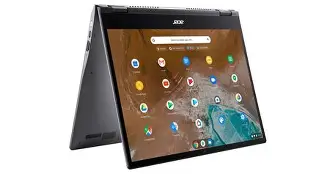
After spending a month living with the Acer Chromebook Spin 713 (2020), the reviewer has a clearer picture of where this machine sits in the landscape of premium Chromebooks. Marketed as a productivity-focused 2-in-1, the Spin 713 promises a high-resolution 3:2 display, laptop-grade performance, and a flexible hinge that adapts to both tablet and tent modes. Many buyers shopping for a Chromebook today care about performance for web apps and Linux development, battery life for a full workday, quality of the keyboard and display for extended typing and reading, and sufficient ports for peripherals. This hands-on evaluation aims to answer whether the Spin 713 2020 satisfies those needs in everyday real-world use.
What was tested
The unit used for the month-long review was a mid-spec model commonly available in the market: Intel Core i5 processor, 8GB of RAM, and a 128GB SSD. The reviewer used the device for remote work (video calls, Google Workspace, Slack), light Linux development, media streaming, occasional photo editing in web apps, and weekend note-taking and sketching with a stylus in tablet mode.
Design and build quality
At first glance, the Spin 713 feels more like an ultraportable Windows laptop than a bargain Chromebook. The chassis uses a metal finish that gives a premium impression without being flashy. The hinge provides a smooth 360-degree rotation, and tent/tablet modes are stable on a desk. The machine is not featherlight, but it strikes a reasonable balance between sturdiness and portability for users who carry a laptop in a commuter bag.
Practical buyers will appreciate the surprising number of ports for a modern thin laptop. On the tested unit there were full-size USB-A ports, two USB-C ports (which support data and display output), a microSD card slot for expanding storage or transferring photos, and a full-size HDMI port useful for connecting to external displays without an adapter. This flexibility reduces the hassle of dongles in meeting and classroom scenarios.
Display: a standout feature
The Spin 713’s 13.5-inch display with a taller 3:2 aspect ratio is one of its distinguishing features. The vertical space makes reading documents, spreadsheets, and web pages noticeably more comfortable compared with a traditional 16:9 laptop. During the month of testing the panel delivered crisp text and a generally bright image that made working near a sunny window feasible.
Color accuracy and gamut are solid for typical productivity and streaming playback, though those doing color-critical photo work should still use an external calibrated monitor. The touchscreen is responsive, and the optional stylus experience is adequate for taking notes, annotating PDFs or sketching diagrams in classroom or meeting contexts.
Discover deals on Electronics — updated daily.
Browse Now →Performance and everyday use
Chrome OS has matured into a capable platform for many productivity workflows, and the Spin 713’s Core i5 configuration handled the reviewer’s multitasking workload without drama. Typical sessions involved multiple Chrome tabs (many with web apps like Gmail, Google Docs, Sheets), a few Android apps, Slack, and several Linux development tools running via the integrated Linux (Crostini) container. The machine did not struggle with those workflows; web apps were snappy, and switching between windows remained fluid.
For heavier tasks — large local builds, virtual machines, or sustained native desktop-grade video editing — the Chromebook’s platform and thermals start to show their limits. However, for the target buyer who needs a fast, reliable machine for browsing, web-based productivity, light coding, and media, the Spin 713 delivers a better-than-average experience among Chromebooks.
Battery life
Real-world battery life varied with workload. In mostly document-based work with web browsing and periodic video calls, the device comfortably approached a full workday on a single charge (roughly 8–10 hours depending on screen brightness and background tabs). Heavy video conferencing or prolonged local video playback reduced that number closer to the 6–7 hour range. For buyers who need guaranteed multi-day battery longevity or all-day streaming at maximum brightness, a secondary charger remains a sensible precaution.
Keyboard and trackpad
The keyboard on the Spin 713 is a pleasant surprise for those who type a lot. Key travel is satisfying for an ultraportable and t…The trackpad is spacious and accurate, supporting Chrome OS gestures without fuss. Paired with the touchscreen, the input combination allows quick navigation between pointer-driven tasks and touch interactions in tablet mode.
Speakers, webcam and microphones
Speakers are adequate for conference calls and casual media consumption but are not a highlight — they lack deep bass and the maximum volume is moderate. The webcam is standard for laptops from the period: serviceable for video calls, though not exceptional in low light. Microphone performance held up well during video meetings when the reviewer was seated near the device; distant voice pickup will still depend on the meeting environment and network conditions.
Software, updates and Linux support
Chrome OS provides a fast, low-maintenance operating system that keeps security and updates automatic. The reviewer made use of the native Linux container to run development tools, lightweight IDEs, and package managers. The Spin 713 handled those tasks reliably, and the combination of a higher-performance Intel CPU and the 3:2 display made coding and reading documentation comfortable. Users who depend on full desktop-class Linux distributions or specialized native applications should check compatibility, but many developers will find the Chromebook + Crostini workflow sufficient.
Find top-rated Electronics products at great prices.
View Offers →Real-world use cases
- Students and note-takers: The 3:2 display and stylus support make reading articles, annotating PDFs, and taking handwritten notes comfortable. Battery life and portability fit a day on campus.
- Remote workers and knowledge workers: Good multitasking with web apps, a pleasant keyboard for long writing sessions, and a strong set of ports for connecting external monitors or docking stations.
- Light developers: Linux app support on Chrome OS enables a surprisingly broad set of development tasks, especially for web development, scripting, and containerized workflows.
- Frequent travelers: A compact footprint and HDMI/USB-C ports are convenient, though those needing the absolute lightest device might consider lighter alternatives.
Pros & Cons
Pros
- Strong 3:2 high-resolution display that improves productivity and reading comfort
- Sturdy, premium-feeling chassis and flexible 360-degree hinge for tablet/tent modes
- Good performance for Chrome OS workloads and Linux container tasks with Core i5 configurations
- Well-rounded port selection (USB-C, USB-A, microSD, HDMI) reduces reliance on adapters
- Comfortable keyboard and accurate trackpad for long typing sessions
- Chrome OS simplicity with automatic updates and native Android + Linux app support
Cons
- Speakers and webcam are serviceable but not class-leading
- Heavier than some ultraportables—power users seeking the lightest carry might prefer other devices
- High-performance CPU options increase price and can push thermals under sustained heavy loads
- Storage can feel limited if the buyer relies on many large local files—external or cloud storage is advisable
How the Spin 713 compares to other premium Chromebooks
| Model | Display | Performance profile | Ports | Battery (typical real use) | Best for |
|---|---|---|---|---|---|
| Acer Chromebook Spin 713 (2020) | 13.5" 3:2 high-res touchscreen | Laptop-grade Intel Core options—good for multitasking and Linux containers | USB-C (x2), USB-A (x2), HDMI, microSD | About a full workday (8–10 hours) in mixed use | Productivity-focused users who want a premium 2-in-1 Chromebook |
| Google Pixelbook Go | 13.3" 16:9 FHD (or higher-res option) | Efficient designs, snappy for web tasks; some models favor battery life | USB-C only | Long (often a full workday, depending on configuration) | Users who prefer a sleek, very portable Chromebook with long battery life |
| Samsung Galaxy Chromebook (2020) | 13.3" QLED 4K option (vivid but higher power draw) | Higher-end specs with design focus; can run warm and hit battery with high-res panel | USB-C ports, limited legacy ports | Variable — premium display models tend to have shorter battery life | Buyers prioritizing a premium, high-fidelity display and thin design |
The table is intended to provide a high-level comparison: different premium Chromebooks emphasize different priorities. The Spin 713 sits in the middle-ground that favors productivity and connectivity without leaning exclusively toward the lightest possible weight or the flashiest display technology.
Buying guide: is the Spin 713 the right Chromebook for a buyer?
Who should consider the Spin 713
The Spin 713 is a strong choice for buyers who want a Chromebook that behaves like a small productivity laptop rather than a tablet-first device. It is well-suited to:
- Students and academics who read long documents and prefer more vertical screen space.
- Hybrid workers who need a reliable device for video calls, documents and spreadsheets, and occasional local tasks.
- Developers or technical users who want to run Linux tools on Chrome OS without significant compromise.
- Users who want a flexible, well-built 2-in-1 and a comprehensive selection of ports.
Important configuration choices
Chromebooks often come in multiple configurations, and choices will affect long-term satisfaction:
- CPU: The Core i5 option provides a noticeable uplift in responsiveness for multitasking and Linux-based builds. If most tasks are light web browsing and document editing, a lower-end CPU may suffice and save money.
- RAM: Aim for at least 8GB if multitasking with many browser tabs or running Linux containers; 16GB is nicer for heavier multitasking but may be unnecessary for casual users.
- Storage: Chromebooks rely on cloud storage, but a larger SSD (128GB or more) is helpful for offline files, Linux packages, and local media. Consider a microSD card for photo offloads or supplemental space.
What to check before buying
- Confirm the exact port layout for the particular SKU—some configurations may differ by region.
- Try the keyboard and trackpad in person if possible; the reviewer found them comfortable, but individual preferences vary.
- If camera quality matters, compare webcams across competitors, as not all premium Chromebooks prioritize camera hardware.
- Consider whether a stylus will be used frequently; check included accessories or compatibility to avoid unexpected purchases.
- Look up recent Chrome OS update policies for the model to confirm how many years of updates remain; this affects longevity and security.
Practical tips from a month of use
- Leverage cloud storage: Use Google Drive or another cloud service to minimize the impact of limited internal storage and to make switching devices easier.
- Manage tab overload: Chrome can use surprising memory with many tabs. Use tab grouping and extensions that suspend inactive tabs to keep performance consistent.
- Use the HDMI port when presenting: Having a full-size HDMI port is convenient in classrooms and meeting rooms where adapters are not always available.
- Backup power plan: For travel days with multiple long video calls, pack a charger—heavy real-time communication is the biggest battery drain observed.
Conclusion
After a month of daily use, the Acer Chromebook Spin 713 (2020) emerges as one of the most practical and well-rounded premium Chromebooks for productivity-minded buyers. Its 3:2 display, comfortable keyboard, robust port selection, and laptop-grade performance make it a particularly good fit for students, remote workers, and light developers who want the simplicity and security of Chrome OS without sacrificing utility.
It is not the lightest or the loudest-speaker Chromebook, nor is it the absolute best choice for color-critical media professionals or those who need the longest possible battery life at maximum screen brightness. For many buyers, however, the Spin 713 hits an appealing balance: premium build and sensible features packaged into a device that makes daily work easier and more comfortable.