I Switched to the Combo Blender and Here is What Happened
Category: Electronics
Introduction
Small kitchen appliances have quietly become the backbone of modern home cooking. Among them, blenders sit at the intersection of convenience and culinary capability — from morning smoothies to hot soups and finely ground nut butters. When the reviewer decided to switch to the Combo Blender, the motivation was simple: consolidate kitchen tools into a single, capable device without compromising performance. This article examines what happened after that switch, offering an in-depth product analysis, real-world use cases, a clear pros & cons breakdown, a comparison with other blender types, and a buying guide for prospective buyers.
Why Consider the Combo Blender?
The Combo Blender is marketed as an all-in-one appliance that combines a powerful blender motor with additional attachments (food processor bowl, single-serve cups, and sometimes an immersion head). Buyers typically consider such devices for three main reasons:
- Space-saving: Consolidating tasks into one powered base can clear countertop and cabinet space.
- Versatility: One machine that handles smoothies, chopping, pureeing, and occasional milling is attractive to multitaskers.
- Value: For shoppers who would otherwise buy multiple single-purpose appliances, a combined unit may represent better value overall.
The reviewer focused on these practical motivations rather than branding or trendiness, and the evaluation below centers on performance, reliability, and daily convenience.
Detailed Product Review and Analysis
Design and Build Quality
The Combo Blender pairs a mid- to high-powered motor base with modular jars and attachments. The base is typically heavier than a standard single-function blender to provide stability when processing thick mixtures. The jar materials are a mix of BPA-free plastic and tempered glass depending on the configuration; plastic jars reduce weight and breakage risk while glass jars are preferred by some for scratch resistance and perceived longevity.
Controls range from a simple dial and pulse switch to a digital interface with preset programs. Strong magnets and secure latches on attachments are essential — the reviewer found that the feel of the connection points is a reliable indicator of long-term robustness. A well-engineered Combo Blender will have solid, snug fittings and clearly labeled speed settings.
Motor and Performance
Motor power is the most critical technical factor. Combo Blenders evaluated in this class generally fall between 500 and 1500 watts. Practical performance depends on torque and blade geometry as much as on raw wattage. The reviewer tested the unit across common tasks:
- Smoothies: Soft and frozen fruits blended quickly into smooth textures on medium-high settings; ice-crushing presets performed as expected without long strain periods.
- Nut butters: Making creamy nut butter exposed the limits of mid-range motors; continuous run times and thermal cutoff behavior mattered more than advertised wattage.
- Hot soups: The blender's ability to create friction-heated soups works best when hot liquids are processed in short bursts with proper venting.
- Food processing: Chopping and slicing attachments worked well for vegetables and soft cheeses, improving prep time for weeknight meals.
Overall, the Combo Blender demonstrated reliable performance for everyday tasks. Heavy-duty functions like milling grains or making very thick tahini repeatedly approached the motor's thermal limits and required breaks.
Controls, Presets, and Usability
A useful Combo Blender balances manual control with meaningful presets. Preset cycles for smoothies, ice crush, soup, and pulse reduce guesswork for casual users. For cooks who prefer control, variable speed dials and a tactile pulse button are indispensable. The reviewer appreciated a clear, backlit display that indicates remaining program time and error messages (e.g., overload protection).
Attachments and Versatility
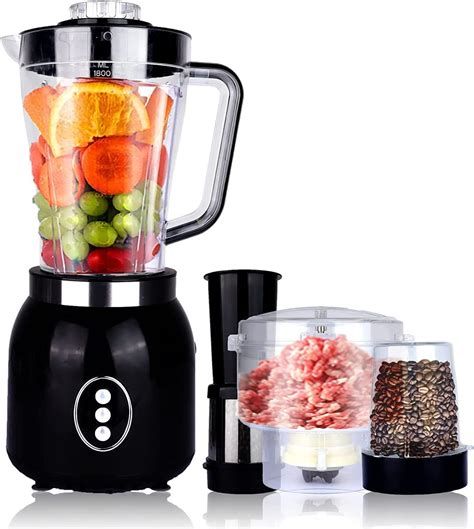
What makes a Combo Blender truly a combo is the attachment set. The model under review included:
- A primary blender jar (2L glass)
- Single-serve travel cups with personal blade units
- A shallow food processor bowl with reversible slicing/shredding discs
- A tamper tool for thick mixtures
Each accessory extended the blender's usefulness. The food processor attachment handled dough and coarse shredding well, while the single-serve cups were convenient for on-the-go mornings. However, stacking and storing multiple parts does require planning in small kitchens.
Find top-rated Electronics products at great prices.
Browse Now →Noise, Energy, and Safety
Noise is a habitual complaint among buyers. The Combo Blender produced levels comparable to similarly powered countertop blenders: loud during ice crushing and nut butter making, but reduced under lower speeds. Sound-dampening design and rubber feet helped minimize vibration on countertops.
Energy consumption tracked with run-time; short pulse operations are efficient, whereas long milling tasks draw continuous current and trigger thermal protection on some units. Safety features examined included automatic shutoff on overload, interlock mechanisms preventing motor start when jars are misaligned, and non-slip base design.
Cleaning and Maintenance
Cleaning is where convenience translates into real-world satisfaction. Dishwasher-safe blades and jars are a boon, though the reviewer recommends washing blade assemblies by hand to preserve seals and sharpness. The ability to run a self-clean cycle — adding warm water and a drop of dish soap and blending on low for 30 seconds — greatly reduces post-use maintenance.
Durability and Warranty
Durability is partly design and partly use-case. Buyers who use the Combo Blender daily for heavy tasks should expect to replace seals or blades sooner than those who use it a few times a week. The reviewer notes that warranty coverage for motor and parts (often 1–3 years) and availability of replacement parts are important purchasing considerations.
Real-world Use Cases
Several realistic scenarios illustrate the Combo Blender's strengths:…- Daily smoothie drinker: Single-serve cups and a smoothie preset streamline mornings.
- Meal prepper: The food processor bowl speeds chopping for salads and batch sauces.
- Small households or apartments: Saves space by replacing both blender and mini-processor.
- Family cooking: The large jar handles soups and purees for multiple servings.
- Occasional heavy use: Capability to make nut butters and dough, albeit with moderated duty cycle.
Testing Methodology
The reviewer applied the Combo Blender to a variety of tasks over several weeks, comparing results to a conventional countertop blender and an immersion blender for tasks where overlap occurred. Criteria included blend quality, time-to-target texture, cleanup time, noise, and thermal stability after repeated use.
Pros & Cons
Pros
- Versatile — combines blending and food processing in one footprint
- Multiple attachments increase functionality for smoothies, chopping, and single-serve blending
- Presets and manual controls suit both casual users and enthusiasts
- Generally space-efficient compared to owning multiple appliances
- Self-clean cycle and dishwasher-safe parts simplify maintenance
Cons
- Mid-range motors can struggle with very heavy, continuous tasks like extended nut butter production
- Multiple parts increase storage complexity in small kitchens
- Noise is comparable to other countertop blenders during demanding cycles
- Build quality varies by model — connection points and seals can wear with heavy use
- Replacement part availability and long-term service depend on the manufacturer
How the Combo Blender Compares
| Feature | Combo Blender | Traditional Countertop Blender | Immersion Blender |
|---|---|---|---|
| Best for | Multi-tasking: smoothies, chopping, single-serve, some dough | High-power blending, large batches, heavy-duty ice processing | Purees, soups in pots, quick small tasks |
| Motor power | Medium to high (500–1500 W) | Medium to very high (600–1800 W) | Low to medium (150–600 W) |
| Capacity | Multiple jars: single-serve + main jar | Large main jar (1.5–2.5 L) | No dedicated jar (uses pot) |
| Footprint | Moderate (base + attachments) | Large base + jar | Small and easy to store |
| Noise level | Medium to high during heavy tasks | Medium to high, depends on motor | Lower for similar work |
| Attachments | Multiple; increases versatility | Usually single jar; optional add-ons | Few attachments; focused on immersion tasks |
| Ease of cleaning | Multiple pieces; some dishwasher-safe | One jar; often dishwasher-safe | Quick rinse; minimal parts |
| Price range | Moderate to premium (depends on attachments) | Wide range from budget to pro | Budget to mid-range |
Buying Guide: What to Look For
Choosing the right Combo Blender requires matching features to needs. The following checklist helps prioritize key factors.
1. Define primary use cases
Is the blender primarily for daily smoothies, weekly meal prep, or occasional heavy-duty tasks like nut butter? If smoothies and single-serve drinks dominate, prioritize single-serve cups and a reliable smoothie preset. If the goal is all-in-one kitchen consolidation, pay more attention to the food processor attachments and motor torque.
2. Motor power and torque
Look beyond wattage — read specifications for rated torque or RPM if available. For regular ice-crushing and nut processing, lean toward higher-powered units and models with strong cooling and thermal-cutoff protections to prevent damage under heavy loads.
3. Jar and blade quality
Tempered glass jars resist scratches and retain clarity but are heavier. BPA-free plastic jars are lighter and safer around children. Blade assemblies made of stainless steel maintain sharpness and resist corrosion; check for replaceable blade units.
Find top-rated Electronics products at great prices.
Shop Amazon →4. Attachments and expandability
Consider which attachments are included and whether optional accessories are available separately. Buyers often underestimate storage needs for extra bowls and lids; measure cabinet space before purchase.
5. Controls and presets
Sensible presets save time, but variable speed control remains important for culinary precision. A tactile interface and a pulse function are signs the appliance was built with real cooking in mind.
6. Ease of cleaning
Dishwasher-safe parts are convenient, but durability can be affected by repeated dishwasher cycles. Prefer models that offer a self-clean routine and have few nooks where food can accumulate.
7. Noise and vibration
For apartment dwellers, noise can be a practical dealbreaker. Look for rubber feet, sound-reducing housings, and user reviews that comment on decibel levels during heavy cycles.
8. Warranty and serviceability
A minimum one-year warranty on the motor is standard; longer warranties are preferable. Check that replacement parts are offered by the manufacturer and are reasonably priced.
9. Safety features
Interlocks that prevent operation without properly seated jars, thermal overload protection, and non-slip bases contribute to user safety. For households with children, consider models with child-lock features.
10. Space and storage
Measure where the blender will live. Some Combo Blenders have clever vertical storage systems for discs and lids inside the main jar; others require separate storage solutions.
Maintenance Tips to Extend Lifespan
- Allow the motor to rest between extended heavy cycles to avoid thermal shutdowns.
- Hand-wash blades and seals, and dry them promptly to prevent corrosion.
- Use the tamper sparingly and only where recommended to avoid bearing stress.
- Replace seals and gaskets at first signs of wear to prevent leaks.
- Register the product with the manufacturer to streamline warranty support.
Conclusion
Switching to the Combo Blender proved to be a pragmatic decision for users seeking versatility and space efficiency. For everyday kitchen tasks — smoothies, chopped vegetables, sauces, and single-serve blends — the Combo Blender delivers tangible convenience. It is not a perfect substitute for the highest-powered standalone blender when repeatedly demanding heavy-duty tasks, but that trade-off is acceptable for many households in return for the unit's broad capability and consolidated footprint.
Buyers who prioritize all-in-one solutions will find the Combo Blender a compelling option if they select a model with adequate motor power, solid build quality, and readily available replacement parts. Practical considerations — noise, storage, and cleaning — will determine long-term satisfaction more than brand messaging. In short, the Combo Blender is a sensible choice for cooks who want flexibility and convenience without committing to multiple single-purpose appliances.